Rain can be relaxing to listen to, but no one enjoys watching a carefully planned outdoor space turn into a slip-and-slide.
Homeowners begin searching for real patio cover ideas for rain when the grill gets soaked one too many times, the outdoor cushions start smelling a little questionable, or weekend plans keep getting pushed back by surprise downpours.
Many products claim complete rain protection. Some are clever. Some are cheap. Some last one season. And some genuinely work long-term.
After years of building patio covers across Central Texas, specific solutions consistently prove their value, while others consistently fall short.
This article explores patio cover options that withstand rain, how to choose the proper setup for your home, and which details truly matter if the goal is a dry, usable outdoor space year-round.

Why Rain Protection Requires More Than Basic Coverage
A patio cover has one job during rainfall: keep the area dry. But achieving that is more complicated than people think. Water moves, pools, creeps under gaps, and pushes against surfaces with unexpected force during storms.
Rain protection requires a structure that can:
- Direct water away from the patio and the home
- Carry the weight of heavy rainfall
- Resist withe nd that blows rain sideways
- Prevent water intrusion at seams, edges, and transitions
- Support proper guttering
Many budget options and outdoor rain covers for patios overlook these fundamentals. The result is dripping edges, leaks where the cover meets the home, and long-term damage to the fascia or siding.
Professional patio builders think about water movement before anything else. Materials, pitch, beams, rafters, flashing, and gutters work together as a single system. If one part is weak, the whole structure suffers.
Common Materials People Choose For Rain Protection (and How They Actually Perform)
Some materials shine in Texas rain. Others deteriorate quickly, stain, or trap moisture. Here’s a breakdown based on real-world results.
1. Aluminum Patio Covers: Lightweight but Effective
Aluminum is one of the most popular choices for rain protection thanks to its affordability and durability. A properly installed aluminum cover sheds rain efficiently and doesn’t rust.
Pros:
- Lasts decades with minimal maintenance
- Doesn’t absorb water or warp during storms
- Lightweight, making installation easier
- Works well with integrated gutters
Cons:
- Can dent if hit with large debris
- Cheaper versions fade or oxidize
- Expansion and contraction can cause noise
For many homeowners, a high-quality aluminum cover is a strong long-term solution, provided it’s installed with the proper pitch and properly sealed where it meets the house.
This is where All Good Roofing and Additions often help homeowners upgrade from thin, low-grade aluminum purchased online to reinforced systems that perform better over time.
2. Insulated Roof Panels: A Stronger Step Up
Insulated patio covers combine aluminum skins with a foam core. The foam provides the structure with strength and helps control temperature beneath the cover.
These covers handle rain exceptionally well because:
- They support higher weight loads
- Their seams lock tightly
- They allow gutter installation without ripping
Insulated roofs cost more upfront, but they outperform standard aluminum in humid climates and during prolonged rainfall.
Who benefits most:
Homeowners who want a quiet, long-lasting, leak-resistant structure that still looks clean and modern.
3. Wood Patio Covers: Beautiful, But Needs Commitment
Wood is classic. It adds charm and character. But for rain protection, the details matter.
A wooden cover needs:
- Proper sealing
- Adequate pitch
- Strong beams rated for moisture
- Regular upkeep to avoid rot
Wood can last for decades, but only with the proper treatment and structure. Many failed covers were simply built too flat or sealed with low-grade materials.
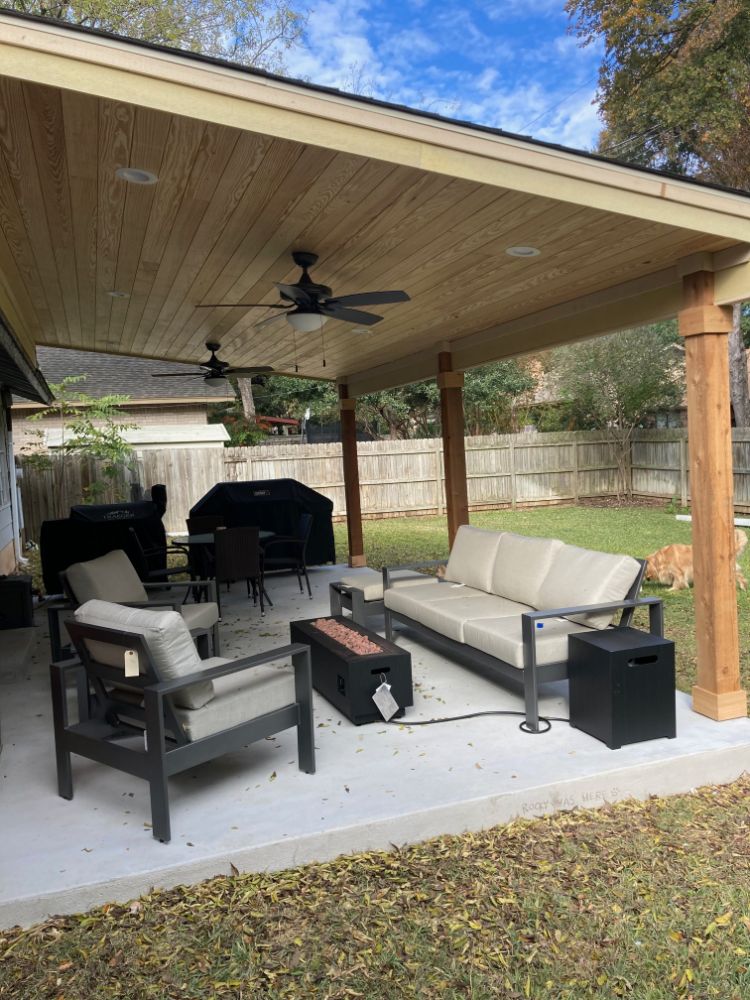
Professionals often combine wooden beams for visual warmth with aluminum or polycarbonate roofing panels to improve water management. This hybrid style works well for homeowners who want both aesthetics and performance.
4. Polycarbonate Roofing Panels: Clear, Durable, and Surprisingly Effective
Polycarbonate is often used for greenhouses, but it performs exceptionally well for patio covers. The panels can be clear, tinted, or opaque, and they’re remarkably strong for their weight.
Why people like them:
- Let in natural light while blocking UV
- Handle heavy rainfall
- Resist cracking and discoloration
- Works well in areas with high winds
The main issue happens when low-quality panels are used or installed without the right sealing strips. A professional installation avoids these problems.
5. Fabric Covers and Tarps: Good for Shade, Poor for Rain
Many homeowners opt for canvas covers, shade sails, or heavy-duty tarps because they appear modern or inexpensive. But they rarely perform well in rain unless specifically engineered for rainwater.
Fabric sags, stretches, collects water, and eventually leaks. Shade sails, in particular, are designed for UV protection, not rain protection.
If a homeowner wants a fabric look, professionals often recommend engineered, tensioned fabric systems that are custom-installed and shaped to channel water. But those fall into a higher price tier.
Flat vs. Pitched Covers: Why the Angle Matters More Than Most People Realize
A cover can have the best material in the world and still leak if the pitch is wrong. Water needs a slope to move. Without it, rainfall pools, causing:
- Sagging
- Fast deterioration
- Standing water stains
- Drips where panels meet
- Extra weight on support beams
Professionals typically recommend a minimum pitch of ¼ inch per foot, though some systems require more. Insulated panels and aluminum roofs often perform best with a slightly steeper angle.
If the patio is next to a second-story wall or has height restrictions, the installer must design a custom solution to ensure the slope works without making the cover appear uneven.
This is another reason professional installation matters. The pitch and drainage determine longevity more than the roofing material itself.
How Wind Impacts Patio Cover Rain Performance
Rain rarely falls straight down in Texas. Wind pushes water sideways, meaning anything with openings or gaps becomes vulnerable.
Pergolas and lattice covers fail immediately because wind-driven rain blows through every slat.
For solid covers, sideways rain becomes a problem if:
- There isn’t enough overhang
- The panels aren’t interlocked correctly
- The flashing isn’t sealed
- The fascia boards are old or damaged
A professional builder checks the wind patterns around your home, including where storms typically push water. It specifies the overhang width and whether side support or trim is required.
How a Professional Builder Approaches Rain Protection
Building a long-lasting patio cover isn’t just about installing beams and panels. Water tells the builder how the structure needs to be shaped, angled, and supported.
A builder looks at:
- Where the rain naturally falls
- How water flows across the existing roofline
- Whether the home’s fascia is healthy
- Whether gutters need to be added or extended
- The direction storms usually come from
- The size of the patio surface
- The weight load the structure must support
Homeowners often express frustration over past leaks, warped panels, or sagging covers. A professional solution addresses all those issues at the design stage.
This approach is central to how companies like All Good Roofing and Additions build long-lasting projects. The team focuses on real-world rain behavior rather than relying on generic instructions in DIY kits.
Ready to Build a Rain-Ready Patio Cover?
All Good Roofing and Additions builds custom patio covers made to withstand Texas weather. Whether you want insulated panels, aluminum systems, polycarbonate roofing, or a complete outdoor living upgrade, the team can help you choose the best fit for your home.
Call us at (512) 458-4353 to schedule your consultation.