
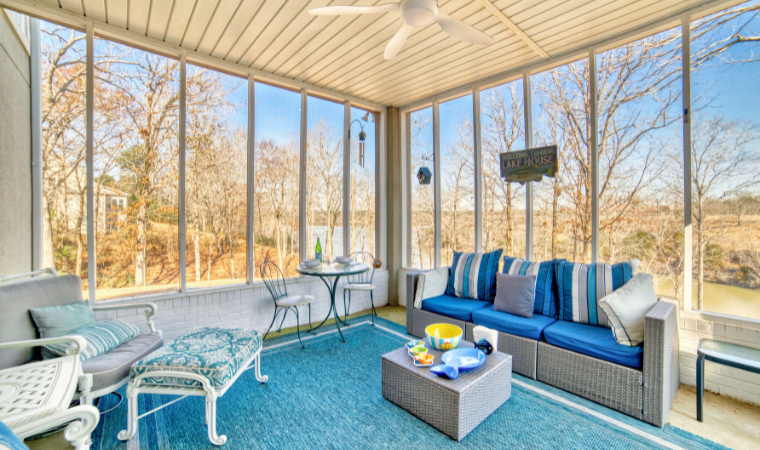
Turning an open patio into a bright, comfortable room can sound simple. Add framing, add glass, done. In real life, an enclosed patio with windows is closer to a small addition than a weekend project.
The patio slab must support new loads, the roof tie-in must withstand wind and water, and the windows must meet safety and energy requirements.
If you plan it right, you end up with a space that works for morning coffee, kids’ projects, a quiet workout corner, or a place to sit out of the weather without feeling closed in. If you skip the prep, you can end up with leaks, sticky doors, fogged glass, or a room that swings from sauna to freezer.
Below is what we review on real projects before we discuss window styles.
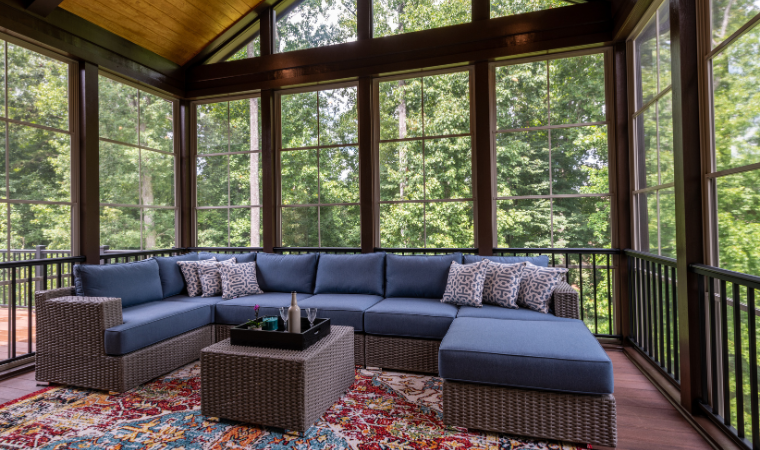
Start With The Big Question: What Do You Want This Space To Do?
Before picking glass, decide how you want to use the room most days.
Common goals we hear:
- “We want bug-free airflow most of the year.”
- “We want rain protection and a place that feels like indoors.”
- “We want a four-season space that stays comfortable.”
- “We want to cut noise or block wind.”
- “We want more daylight without baking the house.”
That “how you’ll use it” answer decides everything that follows, including framing, insulation, HVAC options, and which windows for patio enclosure make sense.
Quick reality check:
A breezy three-season enclosure and a properly conditioned sunroom are not built the same way. If you try to create one like the other, you usually pay for it later in the form of comfort issues or repairs.
Attached or Freestanding
Most patio window enclosures are attached to the home. That attachment point is where projects succeed or fail.
When it’s attached, the enclosure has to match the house in key ways:
- How the roof sheds water
- How flashing is installed where new meets old
- How walls resist wind pressure
- How the structure moves as temperatures change
- How water drains away from the house
It’s also why many “close in the patio” projects are not great DIY candidates. Even our team at All Good Roofing and Additions notes that the existing slab may not be level or designed to support load-bearing walls, and a proper evaluation helps prevent foundation problems later.
The Slab and Foundation
Many patios were poured as outdoor flatwork. That does not automatically mean they are ready to support framed walls, multiple window units, and a roof system.
We typically check:
- Slope and level: Patios are often sloped away from the house for drainage. That’s good outside, but it can complicate interior finishes and door operation once the space is enclosed.
- Cracks and movement: Some cracking is normal, but patterns can indicate settling that may show up in windows and drywall.
- Thickness and edge support: Thin slabs and unsupported edges can become issues once walls are added.
- Water management: If water currently runs across the patio during storms, it may enter your new room unless drainage is addressed.
If the plan includes heavier finishes, taller walls, or a roof tie-in, we recommend a structural approach that correctly supports loads rather than relying on a patio slab that was never intended for that use.
A sunroom or patio room generally relies on a stable, level base for the walls and windows.
Permits and Inspections
In many areas, enclosing a patio changes the home’s footprint, alters egress paths, and adds scope for structural and electrical work. That usually triggers permits.
Even when homeowners say “We’re just adding windows,” the city may see it as:
- A building addition
- A change to exterior walls
- A roof modification
- A new conditioned space
- A structural alteration
Permit needs vary by jurisdiction, but it’s smart to assume you will need one and budget time for the review process. Planning around code also protects you when you sell the house.
Window Performance
Two specs show up again and again:
- U factor: How well the window resists heat flow. Lower values reduce heat transfer.
- Solar Heat Gain Coefficient (SHGC): How much solar heat comes through. Lowering reduces heat gain, which is critical in hot climates.
The U-factor and SHGC are core components of window energy guidance, including federal resources that explain how to select windows by climate zone and orientation.
Energy code requirements for fenestration are also commonly referenced in residential standards.
Practical takeaway:
For a patio enclosure, especially one with extensive glass, choosing the right glass package can be the difference between “We use this room daily” and “We avoid it all summer.”
Common upgrades that help:
- Low E coatings
- Double-pane insulated glass
- Better spacer systems
- Thermally improved frames
Condensation
Condensation is not just annoying. Over time, it can damage finishes, stain trim, and increase the risk of mold growth if humidity remains high.
Condensation often shows up when:
- The room gets humid, and the glass stays cool
- The enclosure is tight but has weak ventilation
- Thermal bridges in framing make surfaces cold
Ventilation is frequently recommended to manage moisture, including exhaust fans and vents to remove moisture-laden air.
Well-insulated, energy-efficient windows can also reduce the risk of condensation by keeping the interior glass warmer.
What we do on many builds:
- Plan ventilation early
- Avoid framing details that create cold corners
- Use window systems built for the climate
- Talk through shading and interior humidity sources
Walls, Insulation, and Interior Finishes
Windows are only part of the envelope. The walls, framing, and insulation strategy decide whether the room feels finished.
Framing choices
- Wood framing is typical and versatile.
- Aluminum systems can be clean-looking, but thermal performance depends on the system details.
Insulation and air sealing
If you want comfort across more seasons, insulation and air sealing usually matter as much as the window package. Otherwise, you end up with drafts, hot spots, and increased load on your HVAC system.
Patio wall panels and knee walls
Some designs use a short solid wall at the bottom and windows above it. It’s where patio wall panels can come into play, depending on the system used and the look you want.
A solid lower section can:
- Protect glass from impact
- Improve privacy
- Give you more wall space for outlets, furniture, and décor
- Reduce glare at seated eye level
Choosing the Right Window Type for How You’ll Live in the Room
Here’s the part most people actually want to talk about, and it’s essential. The best window style depends on ventilation, budget, cleaning requirements, and the look you want inside and out.
Sliding windows
- Great for wide openings
- Easy to use
- Screens work well
- Fewer moving parts than some styles
Trade-off: Only half of the opening typically ventilates at a time.
Single hung or double hung
- Familiar look
- Good ventilation control
- Double hung is easier to clean from the inside
Trade-off: You’re stacking openings vertically, which may require more units for the same view.
Casement or awning
- Excellent seal when closed
- Strong ventilation because the sash opens out
- Awning can vent in light rain
Trade-off: Opening outward can conflict with walkways, furniture placement, and screens.
Picture windows with operable side units
- Big view, lots of light
- Side units add ventilation
Trade-off: The picture window does not open, so you’re committing to fewer vent points.
Window walls and large glass panels
- Huge daylight
- Modern look
Trade-off: Heat gain, glare, and privacy quickly become design issues, especially in the Texas sun.
If you’re planning an enclosed patio with windows that feel comfortable in more months of the year, window performance matters just as much as window style.
Wrapping Up
An enclosed patio with windows can add significant day-to-day functionality, but it works best when the structure, water control, and window performance are integrated as a system.
Start by defining how you want to use the room, be honest about the slab and roof tie-in, and choose windows that fit your climate and habits.
If you’re in the Austin area and considering a patio enclosure, sunroom-style upgrade, or roof and exterior work, All Good Roofing and Additions can help you planthe project from the start.
Call us at (512) 458-4353 to discuss options, timelines, and what would work best for your home.