
Texans love spending time outdoors, but the heat, humidity, mosquitoes, and unpredictable storms often make patios less usable than many homeowners expect.
That’s why more families are comparing a screened-in patio vs glass enclosure to determine which option best fits their lifestyle, budget, and local weather. Both options create a more enjoyable outdoor living space, but the experience you get from each is very different.
Below is an in-depth breakdown based on our experience building patio covers, sunrooms, and enclosures across Texas.
The goal is simple: Help homeowners understand what each option offers and what truly makes sense for year-round use in a state known for triple-digit summers and sudden temperature drops.
Why Many Texas Homeowners Consider Patio Enclosures
Across the state, from Dallas suburbs to the Gulf Coast, homeowners often deal with the same frustrations:
- Too many mosquitoes and flying insects
- Intense heat radiating off concrete patios
- Heavy rain makes outdoor dining impossible
- Severe pollen seasons
- Desire for a functional outdoor space for family time or gatherings
A patio should be enjoyable, not a place you avoid because of the weather or insects. That’s why adding protection, whether screens or glass, can instantly change how often the space gets used.
Before choosing between a screen patio enclosure vs glass room, it helps to understand what each type really delivers.
What a Screened Patio Offers in Texas
A screened patio is an open-air structure with mesh screening on all sides. It maintains an outdoor feel while blocking insects and providing light environmental protection.
Texans often choose screened patios because they provide a breezy atmosphere without the drawbacks of an entirely open space.
Advantages of a Screened Patio in Texas
1. Fresh airflow during mild seasons
A massive perk of screened spaces is ventilation. Texas spring and fall weather can be genuinely pleasant, and screens allow homeowners to enjoy that breeze without pests interrupting everything.
2. More budget-friendly upfront
A screened patio is usually more affordable than a glass enclosure for patio conversions. Materials are simpler, installation is faster, and the overall structure is lighter.
It makes screened patios a popular choice for homeowners who want to upgrade without a major investment.
3. Excellent for shade and bug control
Screens stop mosquitoes, wasps, flies, and other pests, an essential benefit in Texas. They also reduce sun exposure, though screens can’t block heat as well as insulated walls.
4. Easier permitting in many cases
Because a screened patio is often considered simpler than a sunroom, permit requirements may be less complex, depending on the city.
Limitations of a Screened Patio
Even with all the positives, a screened patio still has practical limits in Texas weather.
1. Heat remains a challenge
Screens can’t stop extreme heat. During July and August, even a shaded screened area can feel like a sauna. Without insulation or a way to condition the space, it may sit unused for months at a time.
2. Minimal protection from wind and rain
Screens block insects, but rain can blow right through. It means that dust and pollen can also enter easily.
3. Shorter lifespan depending on the mesh material
Screens can stretch or tear over time, especially after hailstorms or strong winds. They’re repairable but require occasional maintenance.
What a Glass Patio Enclosure Offers in Texas
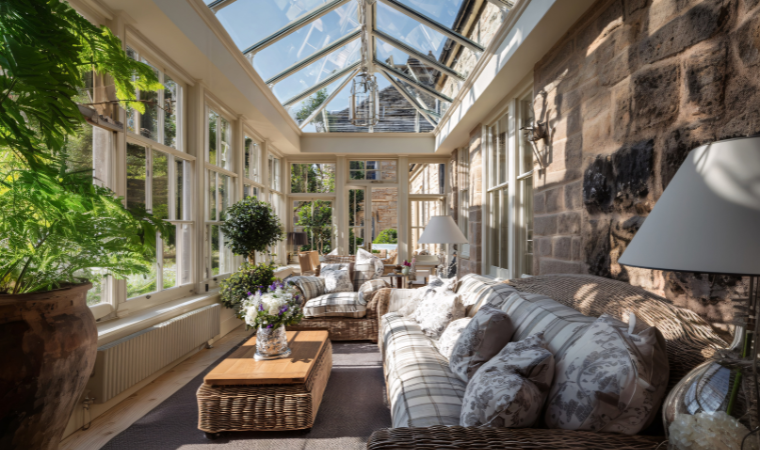
A glass enclosure is often treated as an extension of the home, providing a controlled environment with full walls, windows, and, in some cases, HVAC integration. Many Texans refer to these as sunrooms or patio rooms.
Advantages of a Glass Patio Enclosure
1. Year-round usability
This is the biggest difference in the screened-in patio vs glass enclosure debate. Glass rooms can be heated or cooled, allowing Texans to enjoy the space during:
- Intense 100°+ summers
- Cold winter snaps
- Windy, rainy days
Screened patios can’t offer this level of comfort.
2. Better protection from weather elements
A glass enclosure creates an actual indoor-outdoor room. It blocks:
- Rain
- Dust
- Pollen
- Heat (when insulated glass is used)
- Noise
That stability is a major reason homeowners upgrade from screens to glass.
3. Energy-efficient glass options
Low-E and insulated panels can significantly reduce solar heat gain, making the space easier to condition even during Texas summers.
4. Boosts property value
As long as the enclosure is professionally built and permitted, a glass room adds functional square footage and can improve resale value far more than a screened patio.
Limitations of a Glass Enclosure
As impressive as glass rooms are, they still come with considerations.
1. Higher initial investment
Because of the materials and engineering involved, glass patio enclosures cost more than screened patios. Homeowners should treat a glass enclosure for patio conversions as an actual home upgrade rather than a quick add-on.
2. Longer construction timeline
Glass rooms require:
- Framing
- Foundation assessment
- Electrical planning
- Window installation
- Permits and inspections
That means more planning and build time.
3. Must be installed correctly to handle the Texas climate
Texas storms are no joke. Poorly installed glass can lead to leaks, rattling, or heat issues. It’s the very reason why working with experienced builders matters.
So, Which Is More Practical for Texas Homeowners?
The answer depends on how the space will be used. In our experience building enclosures across Texas communities, these patterns are common:
A screened patio is more practical if:
- The goal is a budget-friendly upgrade
- Homeowners love fresh air
- They mainly use the patio in spring and fall
- They want a simple barrier against bugs
A glass enclosure is more practical if:
- The family wants year-round comfort
- They want a quiet, conditioned space
- They want protection from pollen, wind, and storms
- They see the enclosure as an extension of the home
- They plan to use the space daily, not seasonally
In Texas, many homeowners eventually shift from screens to glass because they realize how much more usable the room becomes with insulation and climate control. However, both options remain strong depending on lifestyle and budget.
How All Good Roofing and Additions Helps Homeowners Build the Right Patio Upgrade
Homeowners often reach out, unsure whether a screened patio or a glass enclosure is the better choice. After assessing the property and listening to how they plan to use the space, our team guides them through:
- Structural needs
- Local permitting
- Material options
- Sun exposure considerations
- Heat control solutions
- Budget expectations
For screened patios, we build durable aluminum frames with long-lasting screening designed for Texas weather. For glass rooms, we offer full patio enclosure conversions, insulated glass systems, and custom framing that matches the home’s style.
Choosing the Right Patio Enclosure for Texas Living
Deciding between a screen patio enclosure vs. a glass room comes down to how consistently homeowners expect to use the space. Both options improve outdoor living, but they fit different lifestyles.
Texans who want airflow and a simple bug barrier often lean toward screened patios. Those who seek reliable comfort, weather protection, and long-term value typically choose glass.
Whether the goal is seasonal enjoyment or a valid year-round extension of the home, All Good Roofing and Additions has the experience to build the right solution with quality materials and professional craftsmanship.
If you’d like help comparing options for your home, the team is always ready to walk through ideas, designs, and cost ranges so you get a space that feels right for your Texas lifestyle.