
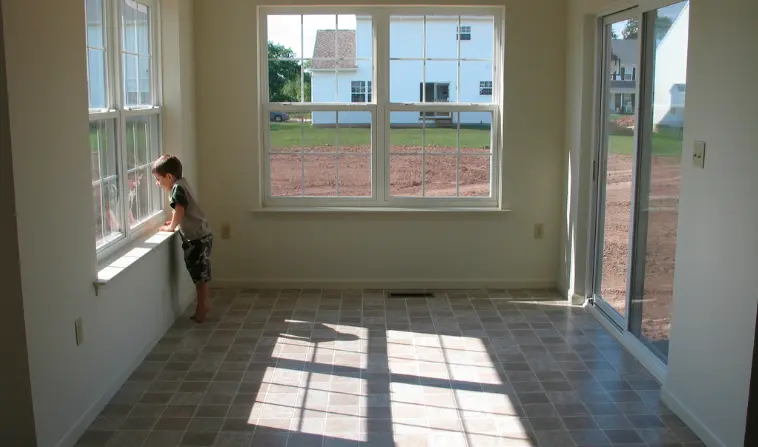
Choosing the best flooring for unheated sunroom spaces takes more thought than picking flooring for a regular indoor room.
All Good Roofing and Additions works with outdoor living spaces, patio enclosures, and sunrooms, so we know these rooms experience sunlight, moisture, temperature swings, and daily wear in ways that differ from the rest of the home.
The right floor should look good, feel comfortable, and handle seasonal changes without constant repairs.
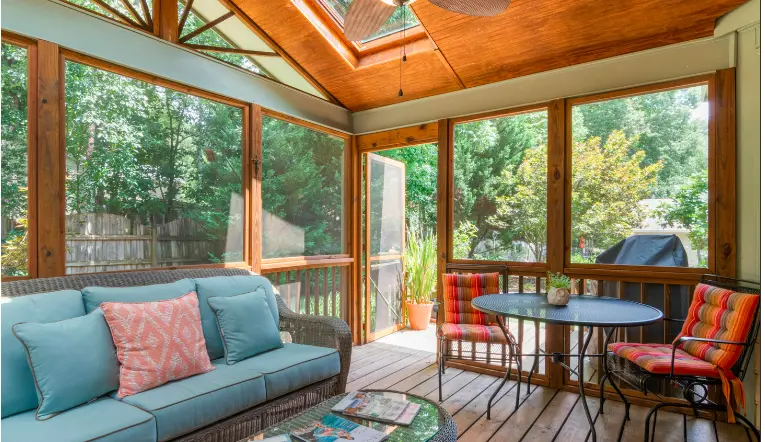
How to Choose the Best Flooring for Unheated Sunroom Spaces
The best flooring for an unheated sunroom depends on how the room is built, how much weather exposure it gets, and how the space will be used.
An unheated sunroom is different from a fully conditioned room because it may get hot in summer, cold in winter, and damp during rainy or humid weather.
That means flooring has to handle more than foot traffic. It needs to deal with:
- Temperature changes
- Moisture from humidity or tracked-in rain
- UV exposure from large windows
- Possible concrete slab movement
- Dirt from nearby patios, yards, or pool areas
- Furniture weight
- Seasonal expansion and contraction
A flooring material that works beautifully in a living room may fail early in an unheated sunroom. Hardwood, standard laminate, and some carpet products can swell, warp, fade, or retain moisture when used in a room without consistent indoor temperature control.
A good sunroom floor should be stable, easy to clean, and suited for a semi-outdoor environment. It should also match the way the room is used.
A quiet reading room has different needs from a plant-filled space, a kids’ play area, or a casual sitting room that opens to the backyard.
Porcelain Tile: One of the Strongest Choices
Porcelain tile is often one of the strongest flooring choices for an unheated sunroom. It is dense, water-resistant, and stable in changing temperatures. It also handles heavy furniture, pets, muddy shoes, and sunlight better than many softer flooring types.
For a sunroom that gets a lot of use, porcelain tile is usually a smart option because it does not swell like wood or peel like some vinyl products can when installed poorly. It can also be cleaned with simple sweeping and mopping.
Porcelain tile works especially well when the sunroom is built over a concrete slab. With proper surface preparation, tile can create a long-lasting floor that feels finished and easy to maintain.
That said, tile has a few drawbacks. It can feel cold during winter, especially in an unheated space. It is also harder on the feet, which may not be ideal for a playroom or a space where people stand for long periods.
Area rugs can help soften the room, but rugs should be breathable and easy to remove for cleaning. For better safety, choose textured porcelain tile rather than a glossy finish. Sunrooms can accumulate moisture near doors, windows, and plant areas, so slip resistance is important.
Best uses for porcelain tile:
- Sunrooms built on concrete slabs
- Rooms with heavy foot traffic
- Spaces near patios, pools, or gardens
- Homes with pets
- Sunrooms used for plants or casual dining
If the goal is long-term durability, porcelain tile is one of the top choices for flooring in unheated sunroom spaces.
Ceramic Tile: A Practical and Budget-Friendly Option
Ceramic tile is another good option for many unheated sunrooms. It is similar to porcelain but usually less dense. For covered, enclosed, and lower-traffic sunrooms, ceramic tile can be a practical choice.
This type of tile gives homeowners plenty of design options. It comes in many colors, patterns, sizes, and finishes. It can create a clean, bright look or a more rustic patio-style finish.
The main difference is that porcelain is generally better suited to areas with more moisture, heavier use, or larger temperature swings. Ceramic tile may still perform well, but the tile’s quality and the installation matter.
A professional installer should check whether the tile is rated for the expected use. Some ceramic tiles are better suited for walls or light indoor areas, while others are suitable for flooring.
The surface should also have enough grip for a sunroom, especially if the room connects to an outdoor patio.
Ceramic tile can be a good fit when:
- The sunroom is fully enclosed
- The slab is stable and dry
- The room gets moderate foot traffic
- The homeowner wants a lower-cost tile option
- The space is used as a sitting area rather than a heavy-use room
Ceramic tile can look beautiful, but it should be chosen carefully. Not every ceramic tile belongs in an unheated room.
Luxury Vinyl Plank: Comfortable, Stylish, and Easy to Live With
Luxury vinyl plank, often called LVP, is popular because it gives the look of wood without the same moisture concerns. Many homeowners like it for sunrooms because it feels warmer than tile, is softer underfoot, and can be easier to install.
For an unheated sunroom, the key is choosing the right product. Some vinyl floors are rated for temperature changes, while others are not. A low-quality vinyl plank may expand, contract, gap, curl, or fade if exposed to strong sunlight and heat.
If using LVP in a sunroom, look for:
- A product approved for sunroom or three-season room use
- Good dimensional stability
- UV-resistant wear layer
- Waterproof core
- Quality locking system or proper glue-down installation
- Manufacturer guidance for temperature ranges
Sheet Vinyl: Simple, Water-Resistant, and Low Maintenance
Sheet vinyl is sometimes overlooked, but it can be a useful flooring option for certain unheated sunrooms. Since it comes in wide rolls, it has fewer seams than plank flooring. Fewer seams can mean fewer places for moisture to sneak underneath.
Modern sheet vinyl looks better than older versions. Some products mimic stone, tile, or wood with a clean finish. It is also comfortable underfoot and easy to clean.
Sheet vinyl may be a good choice for:
- Lower-budget sunroom updates
- Casual enclosed porches
- Rooms used by pets or children
- Spaces where easy cleaning is the main priority
- Areas where a softer floor is preferred
Concrete Flooring: Durable, Clean, and Great for Patio-Style Sunrooms
Concrete can be one of the most practical floors for an unheated sunroom, especially if the room is already built over a concrete slab. Instead of covering the slab with another material, homeowners can stain, seal, polish, or coat it.
A sealed concrete floor can handle temperature changes well. It does not swell, warp, or buckle. It can also create a clean, modern look or a more rustic patio feel.
Concrete is especially helpful in sunrooms that connect directly to outdoor living areas. It can handle shoes, plants, patio furniture, and dirt better than many indoor flooring materials.
Common concrete finish options include:
- Clear sealer for a simple, natural look
- Stained concrete for added color
- Polished concrete for a smoother finish
- Decorative scoring for a tile-like pattern
- Concrete coating for added surface protection
The biggest drawback is comfort. Concrete is hard and can feel cold. Area rugs, furniture pads, and soft seating can make the room feel more inviting.
Concrete also needs proper sealing. Unsealed concrete can absorb moisture and stains. A good sealer helps protect the surface and makes cleaning easier.
For many patio-style rooms, sealed concrete may be the best flooring for unheated sunroom areas where durability matters more than softness.
So, What Is the Best Flooring for an Unheated Sunroom?
For most homeowners, porcelain tile is the safest all-around answer. It handles moisture, sunlight, temperature changes, and heavy use better than many other materials. It is especially strong for sunrooms that connect to patios, gardens, or pool areas.
Luxury vinyl plank is a strong choice when comfort and style matter, but the product must be rated for use in sunrooms.
Sealed concrete is a smart option for practical, patio-style spaces. Natural stone can be beautiful and durable, but it costs more and needs care. Sheet vinyl can work for budget-conscious updates in dry, enclosed spaces.
The best flooring for unheated sunroom spaces usually comes down to this:
- Choose porcelain tile for durability.
- Choose LVP for comfort and a warmer indoor look.
- Choose sealed concrete for low-maintenance practicality.
- Choose natural stone for a premium outdoor-inspired finish.
- Use carpet carefully, preferably as a removable rug.
Ready to improve your sunroom or outdoor living area? Contact All Good Roofing and Additions today to discuss your project and request a free estimate.