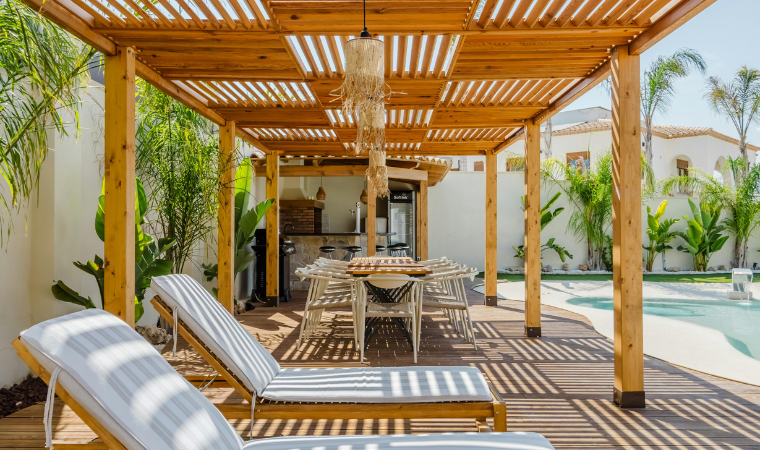
Wood patio covers have been a popular outdoor structure for decades. They add shade, character, and a natural look that blends well with many homes.
A common question homeowners ask before building a wood patio cover is simple: How long do wood patio covers last? The answer depends on several factors, including the type of wood, climate, installation quality, and ongoing maintenance.
At All Good Roofing and Additions, wood patio covers are a common request from homeowners who want a traditional outdoor structure that complements their home. Understanding how long these structures last helps homeowners make better decisions before investing in one.

How Long Do Wood Patio Covers Last Compared to Other Patio Covers?
Before discussing details, it helps to answer the main question directly: how long do wood patio covers last?
A well-built wood patio cover typically lasts 15 to 30 years. Some structures last even longer with proper care. However, lifespan varies depending on the materials used and the structure’s maintenance.
Here is a general comparison of patio cover materials:
- Wood patio covers: 15 to 30 years
- Aluminum patio covers: 25 to 40+ years
- Vinyl patio covers: 20 to 30 years
- Steel patio covers: 30 to 50 years
Wood remains a popular option due to its appearance and design flexibility. It allows homeowners to create custom beams, decorative posts, and pergola-style structures that other materials cannot easily replicate.
Still, the question always comes down to a few critical factors: wood species, exposure to weather, and upkeep.
The Type of Wood Makes a Huge Difference
When discussing how long do wood patio covers last, the species of wood used is one of the biggest determining factors. Different woods have varying levels of resistance to rot, insects, and weather damage.
1. Cedar
Cedar is one of the most popular choices for patio covers.
Benefits include:
- Natural resistance to insects
- Good moisture resistance
- Attractive grain and color
- Lightweight yet strong
A cedar patio cover typically lasts 20 to 30 years with proper sealing and maintenance.
2. Redwood
Redwood has natural oils that protect it from moisture and pests. This makes it another strong candidate for outdoor structures.
The typical lifespan of redwood is 25 to 35 years with proper maintenance. It also has a distinctive appearance that many homeowners appreciate.
3. Pressure-Treated Pine
Pressure-treated wood is widely used because it is affordable and treated with preservatives that resist rot and insects. You can expect these materials to last about 15 to 25 years.
While it may not last as long as cedar or redwood, proper sealing can significantly extend its life.
4. Douglas Fir
Douglas fir is commonly used for structural framing due to its strength. When properly sealed and maintained, it can also perform well outdoors. For these materials, the expected lifespan is 15 to 25 years as well.
Climate Conditions Matter More Than Most People Think
Weather exposure plays a major role in determining how long wood patio covers last.
Outdoor structures deal with sun, rain, humidity, and temperature swings. These elements slowly affect the wood over time.
In areas with intense sunlight, UV rays break down wood fibers and fade protective finishes. In humid climates, moisture can seep into wood, causing swelling or rot.
Common environmental stress factors include:
- Heavy rain exposure
- High humidity levels
- Intense sunlight
- Temperature changes
- Insect activity
For example, patio covers in dry climates often last longer because moisture damage is less common. In humid regions, regular sealing and inspections become more important.
Builders often address these issues during construction by designing the roof with the correct pitch, selecting appropriate lumber, and applying protective finishes.
Construction Quality Has a Huge Impact on Longevity
Another major factor affecting how long wood patio covers last is how the structure is built. A well-designed patio cover includes structural details that help prevent water damage and wood stress.
These design elements include:
- Proper beam sizing
- Correct post spacing
- Adequate roof slope for drainage
- Quality fasteners and brackets
- Flashing where the structure connects to the home
Water management is particularly important. When water sits on wood surfaces or seeps into joints, deterioration happens much faster.
Roof Style Can Extend the Life of a Wood Patio Cover
The roof covering placed over the wood frame affects durability more than many people realize.
Open lattice covers, for example, allow sunlight and rain to reach the wood structure directly. While these designs look attractive, they expose beams to more weather.
Solid roof patio covers protect the wood framing much better.
Common roofing options include:
- Asphalt shingles
- Metal roofing panels
- Polycarbonate panels
- Insulated patio cover panels
Solid roofs reduce exposure to water and UV damage. This can significantly extend the structure’s lifespan. For homeowners researching “how long do wood patio covers last,” choosing a solid roof design can add many years to the structure.
Signs a Wood Patio Cover May Need Repair
Over time, wood structures show signs of aging. Catching issues early can prevent major structural damage.
Some warning signs include:
- Soft spots in beams or posts
- Visible rot or discoloration
- Loose structural connections
- Warped or cracked wood
- Roof leaks or water stains
These issues do not always mean the entire structure must be replaced. Many problems can be fixed by replacing certain beams or applying new finishes. Routine inspections help extend the life of the patio cover.
Why Professional Installation Matters
Many wood patio covers fail early because they were not built properly. Professional builders focus on structural safety, correct spacing, and water management. These details make a major difference over time.
Our professional installation services at All Good Roofing and Additions include:
- Engineered framing layouts
- Proper connection to the home
- Strong footings and posts
- Roofing systems that direct water away
These structural elements help protect the wood and prevent premature damage. Get in touch with All Good Roofing and Additions for reliable installation services that guarantee long-term durability.
Final Thoughts
So, how long do wood patio covers last? Most wood patio covers last 15 to 30 years, depending on the type of wood, climate, construction quality, and maintenance.
Cedar and redwood patio covers often last longer due to natural resistance to moisture and insects. Pressure-treated wood structures also perform well when properly sealed and regularly maintained.
Proper drainage, protective finishes, and routine inspections can add many years to the structure’s life. With the right materials and proper care, a wood patio cover can remain a dependable and attractive part of the backyard for decades.