Austin weather can be rough on vehicles that sit outside day after day. Strong sun fades paint and heats up interiors, while spring storms can drop hail with little warning.
At All Good Roofing and Additions, we often talk with homeowners who want practical shade and storm coverage. This guide explains how carports protect vehicles from Austin UV and hail in real life.
A Builder’s View: How Carports Protect Vehicles From Austin UV and Hail Storms
Understanding how carports protect vehicles from Austin UV and hail starts with a simple idea: most vehicle damage comes from repeated exposure.
One afternoon in the sun may not ruin a truck. One small hailstorm may not total a sedan. But Austin homeowners know the pattern.
A vehicle sits in the driveway through months of direct sun, then storm season brings hard rain, wind, and sometimes hail. Over time, that exposure adds up.
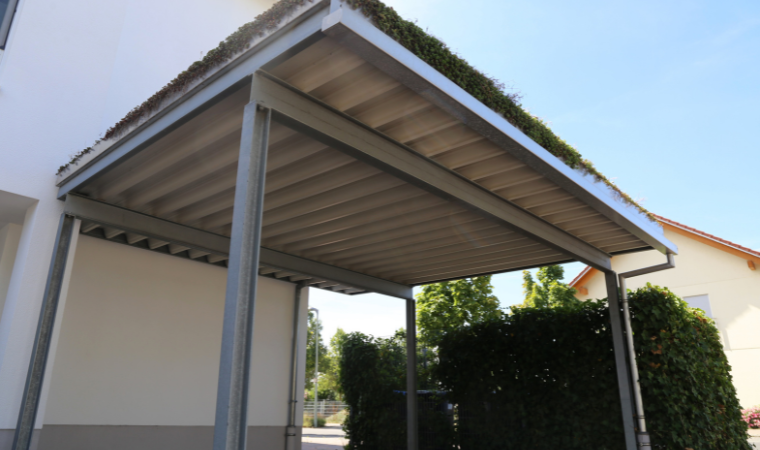
A carport creates a physical barrier between the vehicle and the sky. The roof blocks direct overhead sunlight during the hottest part of the day. It also takes the first hit from hail, tree debris, and heavy rain. A garage gives full enclosure, but many homes do not have enough garage space for every vehicle, boat, trailer, work truck, or daily driver. A carport fills that gap without closing off the driveway.
From a builder’s point of view, a good carport is not just shade. It is a small structure that needs the right roof material, post layout, anchoring, pitch, drainage, and placement. If those pieces are planned well, the carport can protect the vehicle while also fitting the home’s exterior.
Why Austin Sun Is Hard on Parked Vehicles
Austin gets long stretches of bright, hot weather. Even outside peak summer, the sun can be strong enough to warm up pavement, bake dashboards, and make steering wheels too hot to touch.
UV exposure is a big part of that. UV radiation comes from the sun, and the UV Index helps show how strong that exposure can be on a given day. In Central Texas, higher UV levels are a normal part of warm-season life.
Vehicles are built to handle outdoor use, but they are not immune to sunlight. The clear coat on paint, plastic trim, rubber seals, headlights, bed covers, tonneau covers, and interior surfaces ages faster when they sit in direct sunlight every day.
Dark paint can absorb more heat. Black dashboards and leather seats can get especially hot. Even newer vehicles with better coatings and glass still benefit from shade.
This is one of the easiest ways to understand how carports protect vehicles from Austin UV and hail.
The carport roof blocks direct sunlight for much of the day, so the vehicle absorbs less heat and sunlight. Less direct sun means less daily stress on exposed materials.
Over time, that can help reduce:
- Paint fading and clear coat oxidation
- Brittle rubber seals around doors and windows
- Cracked dashboards and interior trim
- Faded seats, consoles, and steering wheels
- Cloudy headlight lenses
- Excess heat inside the cabin
A carport will not stop every ray of reflected light from the driveway, and it does not replace washing, waxing, or interior care. Still, shade is one of the most useful first lines of defense because it works every day without the homeowner having to do anything.
What UV Damage Looks Like Over Time
UV damage is often slow enough that homeowners do not notice it at first. A car parked outside may look fine for a few years, then the finish starts to lose depth.
Red, black, blue, and darker colors can show fading more clearly. The hood, roof, and trunk usually take the worst of it because those surfaces face the sky.
Interior damage follows a similar pattern. A dashboard can start out dull, then small cracks appear. Seat surfaces may dry out. Rubber weatherstripping can shrink or harden, which may lead to more wind noise or water intrusion during heavy rain. Plastic trim around mirrors, bumpers, and bed rails can lose color and turn chalky.
We see this same exposure issue with outdoor building materials. Surfaces that face the Texas sun age differently than areas that stay shaded. That is why roof overhangs, covered patios, pergolas, and carports make such a noticeable difference. Shade changes the wear pattern, especially for vehicles that stay parked for long stretches.
Hail Is the Other Austin Problem
Sun damage is gradual. Hail damage can happen in minutes.
The National Weather Service considers a thunderstorm severe when it can produce hail at least 1 inch in diameter, winds of 58 mph or more, or a tornado.
In Central Texas, those storms can develop quickly. Austin’s location between Hill Country influence, Gulf moisture, and fast-changing spring weather makes hail a real concern for homeowners.
A car left in the open has no buffer. Hail can dent hoods, roofs, trunks, and door panels. It can crack windshields, chip paint, damage sunroofs, break mirrors, and leave a vehicle looking as if it were hit with a ball-peen hammer.
Even smaller hail can cause trouble if it falls hard enough, lasts long enough, or comes with strong wind.
This is where learning how carports protect vehicles from Austin UV and hail becomes more than a comfort topic.
A roofed structure gives hail something else to hit first. Instead of hailstones striking the vehicle directly, they strike the carport roof. The right roof material and frame can absorb and spread that impact better than vehicle sheet metal or glass.
No builder should promise that any open-sided carport makes a vehicle stormproof. Wind-driven hail can blow in from the side. Very large hail can damage many types of roofs.
But for straight-down and angled hail, a carport can greatly reduce the risk of direct hits on vehicles. That can be the difference between wiping off rainwater and calling an insurance company.
Why Roof Material Matters
Carport protection depends heavily on the roof. A weak panel, poor fastener pattern, or flimsy frame can turn a good idea into a short-lived cover. For Austin homes, we usually want a roof that handles sun, heat, rain, wind, and occasional hail without constant upkeep.
Metal panels are popular because they are strong, long-lasting, and good at shedding rain. A properly installed metal roof can take a lot of everyday abuse. It also fully blocks sunlight, which helps with UV and heat control.
Aluminum carport systems are valued for low maintenance and rust resistance. They can work well in Central Texas, especially when the structure is built with the right posts, beams, and roof panels for the site.
Polycarbonate panels allow more light through. That can be useful for patios, but for vehicle protection, homeowners need to think carefully. Some panels offer UV filtering, but the space below can still get brighter and warmer than it would under an opaque roof.
Polycarbonate can be a good option for certain designs, but it should be chosen based on the carport’s purpose.
Shingled carport roofs can match the home nicely when the carport is attached or built as a more permanent architectural feature. If hail is a key concern, homeowners may want to discuss impact-rated roofing products.
Impact resistance ratings, such as UL 2218 classifications, are used in the roofing industry to compare how materials perform under impact testing. That does not mean any product is invincible, but it gives a better basis for choosing materials.
Placement Can Make or Break Performance
A carport should be planned around the sun, driveway flow, roof drainage, and the home’s design. In Austin, the western sun can be brutal in the afternoon.
If a carport is installed without considering sun angles, the vehicle may still be hit hard on one side for several hours. That may be acceptable in some layouts, but homeowners should know what to expect.
Placement also affects hail protection. A carport tucked close to the home may gain some side shielding, but it also needs proper flashing and drainage if attached. A freestanding carport may be simpler in some yards, but it still needs strong anchoring and a roof layout that directs runoff safely.
Good planning should cover vehicle size, driveway slope, sun direction, existing rooflines, setbacks, property lines, HOA rules, lighting needs, and future uses such as a second vehicle or trailer.
The carport should protect the vehicle without creating new problems, such as water dumping near the foundation or posts blocking daily parking.
Final Thoughts
Learning how carports protect vehicles from Austin UV and hail helps homeowners look beyond simple shade. A good carport protects paint, trim, glass, interiors, and daily comfort by providing a barrier to hail before it reaches the vehicle. The best results come from choosing the right size, roof material, frame, placement, and drainage plan.
For Austin homeowners comparing carports, patio covers, pergolas, or covered outdoor additions, All Good Roofing and Additions can help you plan a structure that fits your home, withstands local weather, and makes everyday life easier.