
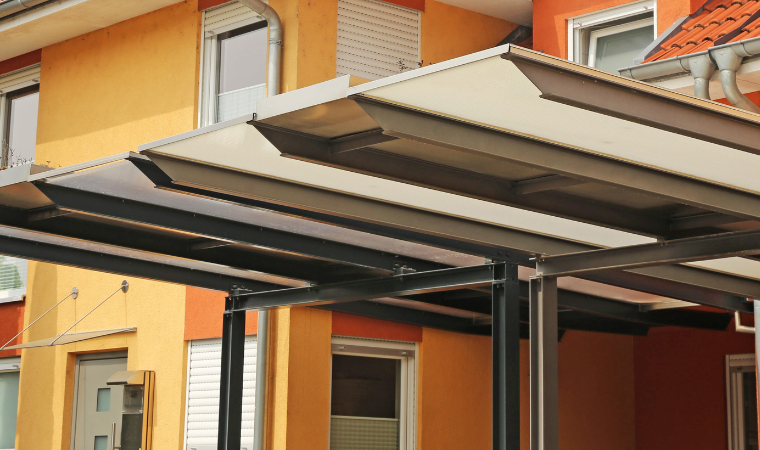
Homeowners ask a fair question before spending money on covered parking: Do carports add value to homes in Austin?
At All Good Roofing and Additions, this comes up often because a carport is part home improvement, part weather protection, and part curb appeal upgrade. The answer depends on design, build quality, placement, permits, and how well the structure fits the property.
A Builder’s Practical Answer: Do Carports Add Value to Homes in Austin?
Yes, a well-built carport can add value to an Austin home, but usually in a practical way rather than like a bedroom, bathroom, or full garage. Buyers may see it as covered parking, shade, storm protection, and proof that the property was improved with daily use in mind.
Austin homes are judged by more than square footage. A buyer notices the driveway, rooflines, shade, exterior condition, and parking setup before walking inside.
A carport sits right in that first impression zone. If it looks like it belongs with the home, it can make the property feel more complete.
Does the carport solve a real problem for the next homeowner? If the home has no garage, a tight garage, a converted garage, or a long exposed driveway, the answer is often yes. If the carport is flimsy, poorly placed, or out of step with the house, it can do more harm than good.
Why covered parking matters in Austin
Austin weather is hard on vehicles and outdoor surfaces. The sun is strong for much of the year; summer heat builds up inside parked cars quickly, and hail can show up with little warning during storm season.
A driveway without cover leaves vehicles exposed to UV radiation, rain, falling debris, and hail.
Covered parking helps with daily problems. It keeps vehicles cooler during hot months, helps protect paint and interiors from sun exposure, gives homeowners a dry place to load groceries or tools, and adds shade to a driveway or side yard.
It can also cover boats, trailers, motorcycles, lawn equipment, and work vehicles.
That is why “Do carports add value to homes in Austin?” is such a common question. The value is tied to use. In a city where shade and parking both matter, a carport can feel less like an extra and more like a practical part of the home.
This is especially true for older Austin houses. Many were built with smaller garages, single-car garages, or no garage at all.
Some owners convert garages into offices, gyms, guest rooms, or living areas. Once that happens, the home may gain indoor space but lose protected parking. A carport can help fill that gap.
Value is not always appraised like square footage
A carport usually does not add value the same way finished living space does. Since it is open-sided, it is generally not treated as heated and cooled square footage. It may also be valued differently from a fully enclosed garage.
That does not mean it has no value. It means the value often shows up in buyer interest, property function, curb appeal, and how the home compares with nearby listings.
Picture two similar homes on the same weekend. Both have three bedrooms, two bathrooms, and similar lots.
One has an exposed driveway. The other has a clean, well-matched carport that protects two vehicles and makes the entrance feel more finished. The second home may feel more useful, especially if the buyer has multiple drivers in the household.
Appraisers look at comparable sales, condition, location, and improvements. A carport may matter more if nearby homes have similar features or if covered parking is common in that neighborhood.
It may matter less if most nearby homes have full two-car garages. That is why one flat dollar amount rarely tells the whole story.
Where a carport usually adds the most value
A carport tends to make the strongest impact when it solves a missing feature. If a house already has a large attached garage, the carport may be viewed as a bonus. If the house lacks covered parking, the carport can play a bigger role.
Homes that often benefit most include:
- Older homes with no garage.
- Homes with a garage conversion.
- Homes with small one-car garages.
- Properties with long driveways and no shade.
- Houses with limited street parking.
- Homes with boats, trailers, work trucks, or recreational gear.
So, do carports add value to homes in Austin? They often do when the house has an obvious parking or shade problem. Buyers do not need to imagine the benefit. They can see it as soon as they pull up.
Design decides whether the carport helps or hurts
A carport that looks like an afterthought can weaken curb appeal. The structure may technically cover a car, but if the posts, roof pitch, color, and placement clash with the house, buyers may read it as clutter.
Good design starts with the home. A carport should work with the existing roofline, siding, trim, windows, and driveway layout. It should feel intentional from the street. The goal is to make the property look improved, not patched together.
For many Austin homes, that may mean a simple metal carport with clean lines. For a ranch-style home, a lower-profile structure may look better than a tall, bulky one.
For a home with wood accents, a wood-framed or mixed-material carport may feel warmer. For modern homes, aluminum or steel can create a cleaner look.
The roof matters too. A flat, gabled, shed, or attached roof all create a different impression. The roof should direct water away from the home and driveway, not toward the foundation. Gutters, downspouts, drainage paths, and slab slope all matter.
How much value can a carport add?
There is no honest one-size answer. The value depends on the home, neighborhood, structure, design, permits, and buyer expectations. A carport on a modest home with no covered parking may make a bigger difference than a carport added beside a home that already has a large garage.
Cost also matters. Spending wisely is part of protecting value. A simple, well-built carport that meets a clear need may yield a better return than an oversized structure with expensive details that buyers do not care about.
Going too cheap can also backfire if the structure looks temporary or wears out quickly.
A practical way to think about value is to ask three questions:
- Does it solve a problem the house currently has?
- Does it look like it belongs with the home?
- Will buyers trust how it was built?
Final Thoughts
So, do carports add value to homes in Austin? In many cases, yes, especially when the home needs covered parking, the structure is built well, the design fits the property, and the paperwork is handled correctly.
The best carports protect vehicles, add shade, improve daily convenience, and make the property feel more useful.
The key is to avoid treating a carport like a quick add-on. Austin homes need structures that can withstand heat, storms, drainage issues, local regulations, and buyer expectations. A carport should look planned, feel solid, and make sense for the home’s layout.
For homeowners considering materials, sizing, roof style, and placement, All Good Roofing and Additions can help with carports, patio covers, pergolas, and related outdoor additions for Central Texas homes. Contact us today for a consultation.