Choosing the best roof panels for carports affects shade, heat, noise, curb appeal, and long-term upkeep. At All Good Roofing and Additions, carport planning often starts with one simple question: what should go on top?
The answer depends on how much sunlight you want, how the structure is framed, and how much maintenance you are willing to handle.
What Makes the Best Roof Panels for Carports Different From Regular Patio Roofing?
The best roof panels for carports have to do more than cover a parked vehicle. They need to shed rainwater, withstand sun exposure, resist wind uplift, and remain fastened through years of expansion, contraction, and seasonal storms before any new cover is installed.
That is why panel choice should be tied to the frame, pitch, fasteners, drainage, and local weather from the start of the project plan. The span between supports also matters. Longer panels can reduce seams, but they need the right thickness and profile to avoid sagging.
Most homeowners compare three common options: polycarbonate, steel or other metal roofing, and aluminum. Each one can work well, but each one has a different strength.
Polycarbonate lets light through. Metal roof panels bring strength and a classic carport look. Aluminum roof panels are light, corrosion-resistant, and clean in appearance.
Polycarbonate Roof Panels: Bright Shade Without a Dark Carport
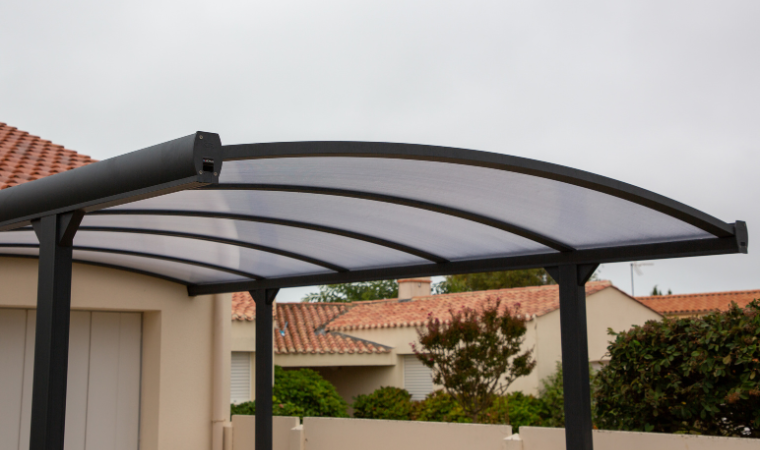
Polycarbonate roof panels are popular among homeowners who want weather protection without making the driveway feel boxed in.
These panels are lightweight, impact-resistant, and available in clear, white, bronze, gray, and tinted finishes. Many products are also made with UV protection, which helps reduce sun damage and yellowing.
Many people search for 10 ft polycarbonate roof panels, as this length fits many small carport bays, walkway covers, and patio-style roof layouts. The big advantage is light control. Clear panels allow the most daylight, while tinted or opal panels soften glare and reduce heat gain.
Polycarbonate does have limits. It can expand and contract more than metal, so fastener holes, closures, washers, and overlap details matter. If installed too tightly, panels may creak, warp, or pull around screws. If installed too loosely, wind-driven rain can find gaps.
Polycarbonate is a good fit for:
- Single-car covers where daylight matters
- Side-yard carports attached near windows
- Homeowners who dislike a fully shaded driveway
- Projects where a lighter roof helps reduce framing load
Metal Roof Panels: Strong, Familiar, and Built for Heavy Use
Metal roof panels are often the practical choice for carports that need a stronger, more permanent feel. In residential carports, “metal” usually refers to steel panels with a protective coating, often in corrugated, ribbed, or standing-seam profiles.
The strength of metal is a major reason many builders like it. Steel panels can handle daily sun, rain, and debris better than many light-transmitting materials. They also come in many colors, which makes it easier to match trim, gutters, fences, or the home’s roofline.
The tradeoff is heat and sound. A solid metal roof blocks light, so the space below will be darker.
It can also be louder during rain unless the structure includes solid decking, insulation, or sound-dampening details. In hot climates, color matters too. Lighter finishes usually stay cooler than dark finishes in full sun.
Metal roof panels also need proper edge trim and drainage. Exposed cut edges, scratches, or wrong fasteners can create rust points on steel.
Among the best roof panels for carports, metal is often the best all-around choice for strength, coverage, and a finished look.
Aluminum Roof Panels: Lightweight, Clean, and Corrosion-Resistant
Aluminum roof panels are another strong option, especially for homeowners seeking a lighter roofing material. Aluminum naturally forms a surface oxide layer, which helps it resist corrosion better than plain steel. That makes it useful in humid areas, near pools, or in places where moisture sits longer than expected.
Aluminum panels are also easier to handle on many residential jobs because they weigh less than steel. That can be helpful for patio-cover-style carports, attached covers, and structures where frame weight is a concern. The clean, bright finish also works well with modern home exteriors.
The main drawback is dent resistance. Aluminum can dent more easily than steel if struck by large hail, falling branches, or careless ladder use.
It also requires proper fasteners, as mixing dissimilar metals can increase the risk of corrosion at contact points. A good installer will match screws, washers, flashing, and trim to the panel type.
Aluminum usually costs more than basic steel panels, but it can be worth it for moisture resistance and lower weight.
Comparing Carport Roof Panels by Real Applications
The best roof panels for carports should be chosen based on how the carport will be used day after day. A shaded parking cover for one sedan has different needs than a wide cover for two trucks.
Here is a simple way to compare common carport roof panels:
- Polycarbonate: Best for daylight, lighter shade, and a less enclosed feeling. Watch for expansion, scratches, and proper UV-rated quality.
- Metal: Best for durability, strong shade, color choices, and larger structures. Watch for rain noise, heat, and cut-edge corrosion.
- Aluminum: Best for low weight, corrosion resistance, and clean patio-cover styling. Watch for dents and higher material costs.
So, What Are the Best Roof Panels for Carports?
Choosing the best roof panels for carports is easier when the decision starts with daily use instead of material labels. Think about shade, light, heat, rain, noise, maintenance, and the size of the structure. Then match the panel to the frame and installation details.
For homeowners planning carports, patio covers, pergolas, or home additions, All Good Roofing and Additions can help compare polycarbonate, metal, and aluminum options. A good choice should look right, drain well, and protect what matters for years.