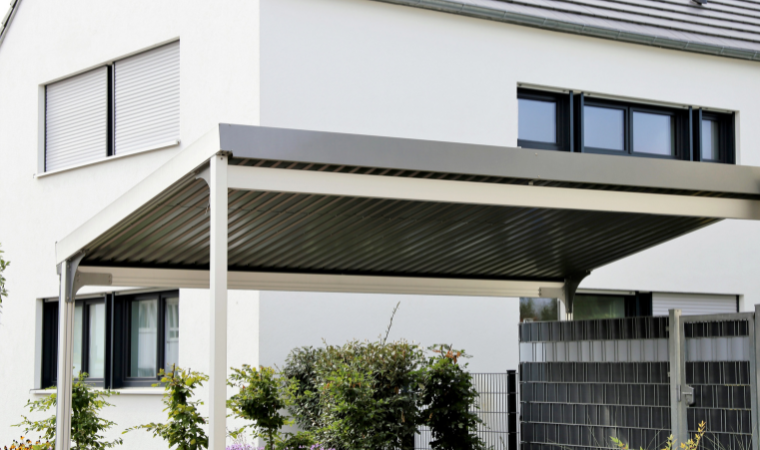
Metal vs aluminum carports can look similar at first glance, but they do not perform the same once sun, rain, wind, weight, and daily use are involved. For homeowners comparing carport materials, the right choice depends on the structure, location, budget, and long-term upkeep.
All Good Roofing and Additions works with carports, patio covers, and outdoor additions, so this topic deserves a practical breakdown.
Comparing Metal vs Aluminum Carports for Everyday Home Use
Comparing metal vs aluminum carports can be confusing because aluminum is technically a metal. In most home improvement conversations, though, “metal carport” usually means steel. That is the real comparison: steel carports versus aluminum carports.
Both materials can protect a vehicle from direct sun, rain, falling leaves, bird droppings, and light hail. Both can be freestanding or attached to the house.
Both can also be sold as prefabricated products, which is why homeowners often search for aluminum carports for sale, metal carport kits, or metal carport awning kits before deciding whether to buy a kit or speak with a builder.
The difference shows up over time. Steel is usually stronger and heavier. Aluminum is lighter and naturally more resistant to rust. It tends to feel more solid for large spans, tall vehicle covers, and heavier roof systems.
Meanwhile, aluminum often makes sense for lighter covers, clean patio structures, and areas where corrosion resistance matters.
The better choice depends on the property. A small driveway cover has different needs from an RV cover, a boat cover, or an attached patio cover that must blend into the house.
The material should match the use, the site, the anchoring plan, and the amount of maintenance the homeowner wants later.
What Counts as a Metal Carport?
In residential construction, a metal carport usually refers to a steel-framed structure with steel posts, beams, roof panels, and braces. Many steel systems use galvanized steel, which has a protective zinc coating to slow rust. Others use painted or powder-coated steel for a finished look and added surface protection.
Steel is popular because it can handle heavier loads when it is properly planned and installed. That matters for wider openings, taller clearance, enclosed side panels, and carports that need more stiffness. A steel frame also helps reduce wobble on larger structures.
What Counts as an Aluminum Carport?
An aluminum carport is usually lighter than a steel carport. The posts, fascia, framing, and roof panels may be made from aluminum components. Aluminum is valued because it does not rust the same way steel does.
When aluminum is exposed to air, it forms a thin oxide layer that helps protect the surface. That does not mean aluminum is maintenance-free, but rust is usually less of a concern.
This is why aluminum is common for patio covers, screened rooms, shade structures, poolside covers, and many home additions. It has a clean finish, it is easier to handle during installation, and it works well for many residential cover projects.
Homeowners who search for aluminum carports for sale often see lightweight kits, attached covers, and modular systems. Those products can be useful, but the key question remains the same: Will the structure fit the site, meet local requirements, and hold up in local weather?
Strength, Wind, and Anchoring
In Texas, carports should be discussed with wind in mind. Open-sided structures catch uplift differently from enclosed garages. The roof gives shade and protection, but wind can push under it and pull upward. That is why anchoring is just as important as the frame material.
Steel usually has the advantage for heavy-duty framing. It can be a better fit for larger carports, taller posts, and sites where the structure is more exposed.
Aluminum can still perform well, but the design has to match the span and wind. A lightweight frame with weak anchors can fail even if the material itself is decent.
Homeowners comparing metal vs aluminum carports should ask these questions before buying:
- What wind rating is listed for the structure?
- What type of anchors are required for concrete, asphalt, or ground installation?
- Are the posts sized for the roof width and height?
- Does the roof shape shed water properly?
- Are local permits or setback rules involved?
Those details matter more than a low online price. A carport that shifts, rattles, leaks, or pulls loose in a storm becomes expensive fast.
Kits vs Custom-Built Carports
Many homeowners start with metal carport kits because they seem straightforward. A kit can work for a basic freestanding cover on a flat site. It may include pre-cut framing, roof panels, fasteners, and instructions.
Some metal carport awning kits are also sold for side-yard shade, entry covers, or smaller driveway protection.
The issue is that homes are rarely as simple as a product photo. Driveways slope. Fascia boards may need repair. Concrete may be too thin for certain anchors. A roofline may drain into the carport area. Utility lines, fence setbacks, and property rules may affect placement.
Online searches can also create confusion. For example, the phrase “aluminum carport kits UK” refers to British spelling and products sold in a different market.
Those kits may follow different sizing, wind assumptions, hardware standards, and building expectations. A product that looks right online may not be the right pick for a Texas home.
Custom work offers greater control over height, post placement, drainage, attachment points, trim, and overall look. It can also blend the carport with a patio cover, a metal patio cover, a pergola, or a roof extension.
Maintenance and Long-Term Care
Maintenance is where aluminum often wins. It does not need the same rust watch that steel requires. Washing off grime, checking fasteners, clearing leaves, and inspecting sealant may be enough for many aluminum carports.
Steel needs a little more attention, especially near scratches and cut edges. Touch-up paint, clean gutters, and quick rust treatment can stretch the life of the structure. Good steel finishes are worth paying for because cheap coatings can fade, chalk, or fail sooner.
For both materials, the weak points are often the same: loose fasteners, poor drainage, leaves trapped against panels, posts set where water collects, thin panels that flex too much, and mixed metals used without proper separation.
The best carport is not maintenance-free. It is maintenance-light because the design was right from the start.
Appearance and Home Value
A carport sits in view every day, so appearance matters. Steel can create a heavier, more structural look. Aluminum can look cleaner and lighter. Either one can look good if the proportions match the home.
The biggest mistake is choosing a carport only by size and price. A low roof can look cramped. Posts in the wrong place can make parking awkward.
A mismatched panel color can make the front of the home feel unfinished. Trim, fascia, post spacing, roof pitch, and gutter placement all affect the final result.
Cost: What Are You Really Paying For?
Aluminum may cost less in some kit forms, but premium aluminum systems can cost more than basic steel. Steel can be cost-effective for larger spans, but coatings, engineering, anchoring, and installation affect the final price.
Comparing metal vs aluminum carports by material alone misses the bigger picture.
The real cost includes frame strength, roof panels, finish, fasteners, anchors, permits, site prep, labor, drainage, and future repairs. A cheaper kit may become more expensive if it needs extra bracing, better anchors, replacement fasteners, or repairs after the first hard storm.
A fair comparison should look at the full use case. Is the carport protecting a daily driver, a new truck, an RV, or work equipment? Will it attach to the home or double as covered outdoor space? Each answer changes the value of steel or aluminum.
So, Which One Is Better?
For larger, stronger, more permanent structures, steel is often the better choice. It is usually the better fit for wide spans, taller covers, heavier use, and areas where impact resistance matters. For smaller covers, rust resistance, cleaner appearance, and lighter framing, aluminum can be the smarter choice.
That is why metal vs. aluminum carports do not have a single universal winner. Steel wins on strength. Aluminum wins on rust resistance and weight. The right answer depends on the site, the budget, the look, and how the carport will be used year after year.
All Good Roofing and Additions can be a helpful local resource for comparing options and thinking through the details before construction begins.