
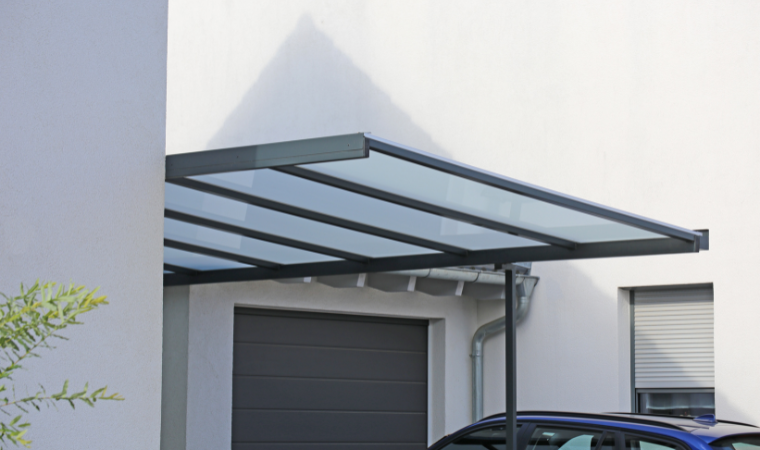
Austin homeowners often ask this because a carport looks simple outside. It may be open on the sides, but it is still a roofed structure that can affect drainage, setbacks, wind load, and property lines.
We at All Good Roofing and Additions often hear the same concern from families planning driveway shade: do carports need permits in Austin before work begins?
Learn the Basics: Do Carports Need Permits in Austin & Does it Apply to Your Project?
In most cases, yes, a carport in Austin requires a permit when built as a permanent structure. The City says a building permit is required to erect, construct, enlarge, alter, repair, improve, remove, convert, relocate, or demolish structures within its zoning jurisdiction. A carport may not have full walls, but it still has posts, footings, framing, and roof loads.
That is why the better question is not simply “Do carports need permits in Austin?” but rather: what kind of carport are you planning, where will it sit, and how will it be attached or anchored?
A small freestanding shade cover may be treated differently from a large attached carport. A driveway cover near the front property line may raise different issues than a rear-yard structure.
Austin lists limited residential work that is exempt from a building permit. One exemption is a one-story detached accessory structure no larger than 200 square feet, no taller than 15 feet, with no plumbing, no dwelling use, and no location within a flood hazard area.
Even then, the city says that exempt work must still comply with applicable building codes, city codes, and ordinances.
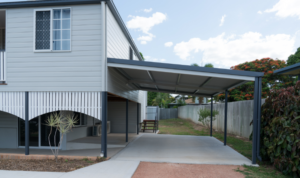
Permit Rules Depend on Size, Attachment, and Location
Do carports need permits in Austin if the cover is freestanding? Often, yes, especially when it exceeds the small detached accessory structure exemption or includes concrete footings, structural framing, or other code-covered work.
Attachment to the house usually makes the review more serious because the new roof may affect the existing wall, fascia, roof edge, foundation, or drainage pattern.
Size matters because larger roofs experience greater wind force and collect more rainwater. A 10×20 carport is 200 square feet before overhangs are counted. A 20×20 carport is 400 square feet, beyond the common small-structure exemption.
Location matters too. Austin zoning can limit how close a structure sits to lot lines. Impervious cover also matters because rooftops, driveways, parking areas, and other hard surfaces can count against the limit.
What the City May Want to See
For a typical residential carport permit, homeowners should expect more than a quick sketch. Exact requirements vary, but a permit packet often includes:
- A site plan showing the house, driveway, proposed carport, property lines, easements, trees, and setbacks
- Construction drawings showing height, post locations, beam sizes, roof slope, and roof material
- Foundation or anchoring details for posts
- Drainage notes showing where roof runoff will go
- Product or panel information if using metal roof panels
- Contractor registration information when a contractor handles the work
Austin’s homeowner permitting resources describe a basic process: determine the permit type, gather the forms, create an AB+C Portal account, submit the application, and manage inspections or permit activation. The City also offers an interactive permit tool for homeowners.
Attached Carports Can Trigger Extra Questions
Do carports require permits in Austin when they are attached to an existing home? This is where homeowners should be extra careful.
An attached carport can change how loads move through the house. It may connect to fascia that was never meant to support a roof extension. It can also trap water where two rooflines meet if flashing is handled poorly.
The connection point is one of the most important parts of the build. If the carport is tied into the house wall, the framing should be anchored to sound structural members, not just trim.
If it is tied into the roof edge, the slope and flashing must keep water moving away from the home. Some homeowners try to avoid permits by calling the project temporary. That can be risky if the carport is anchored, bolted, or wired.
HOA, Historic District, and Neighborhood Rules
A city permit is not the only approval required for a carport. Many Austin neighborhoods have homeowners’ association rules, deed restrictions, or design standards.
Some areas also have historic review concerns. A street-facing carport may face more design limits than one placed behind the house.
HOA rules may cover roof color, post material, height, front-yard placement, driveway coverage, and whether metal roof panels are allowed. These rules are private, but they can still create trouble if ignored. A project can pass city review and still violate neighborhood documents.
Before building, homeowners should check HOA documents, historic district requirements, utility easements, drainage paths, tree protection issues, and property lines. This step is less exciting than choosing materials, but it saves money.
What Happens If You Build Without the Right Permit?
Do carports need permits in Austin badly enough to delay the project? In many cases, yes, because unpermitted work can turn into a bigger delay later.
If the city receives a complaint or the issue arises during a sale, the homeowner may need to stop work, submit drawings, uncover hidden work, pay fees, or make changes to meet code requirements.
The biggest risk is not always the fee. It is possible that the carport was built in the wrong place or with the wrong framing.
Moving posts, cutting concrete, changing roof slope, or revising a beam after construction costs more than planning it right the first time. A clean permit record gives the homeowner a stronger paper trail.
Practical Planning Tips Before Calling a Builder
Do carports need permits in Austin for every possible design? The safest answer is to check before assuming.
Start with the property address, lot survey, carport size, preferred location, and a clear idea of whether the structure will be attached or freestanding. Then review the City’s permit tool or speak with Development Services.
A builder can also spot issues early. A carport may fit in the driveway but fail due to a setback. Another design may pass location rules but needs a different beam layout because the span is too wide. A roof may need better drainage because the driveway slopes back at the house.
Good planning includes the plain details: post bases, anchors, gutters, panel laps, fastener pattern, slope, vehicle clearance, and access around the home. These details are where carports either age well or become a weekly annoyance.
Final Thoughts
So, do carports need permits in Austin? Most permanent carports should be treated as permit projects unless the city confirms that the specific scope is exempt from permitting.
The answer depends on size, height, attachment, floodplain status, location, setbacks, impervious cover, trade work, and neighborhood rules.
A carport is worth doing well because it affects parking, curb appeal, drainage, and long-term property value.
Whether the plan calls for a single-car cover, a double-wide driveway cover, or metal roof panels that match an existing patio cover, strong results start with clear drawings and code-aware planning.
All Good Roofing and Additions can help homeowners think through carports, patio covers, and related outdoor structures with a practical builder’s eye.