
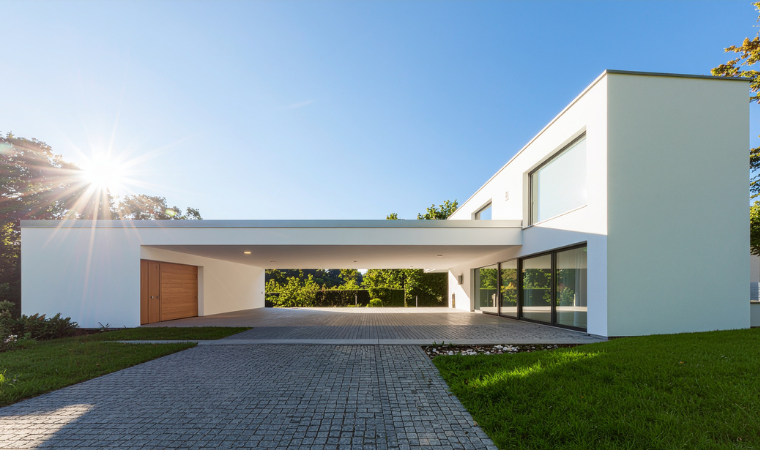
Are carports worth it for Austin homeowners? For many Austin families, the answer depends on heat, hail, driveway layout, budget, and the level of protection they want without building a full garage.
At All Good Roofing and Additions, we hear this question often because Central Texas weather can be rough on vehicles, outdoor storage, and open driveways.
Learning the Basics: Are Carports Worth It for Austin Homeowners?
In many cases, yes, as long as the carport is planned around the house, driveway, local rules, and daily use. A carport is not a garage. It does not give full enclosure, climate control, or the same level of security as a closed structure.
What it does offer is steady overhead coverage at a lower cost and with less disruption than a garage addition.
That matters in Austin. A vehicle parked outside sits through strong sun, sudden storms, heavy rain, falling leaves, bird droppings, sap, and occasional hail.
Even if a carport does not stop every sideways storm, it provides the vehicle with a shield against the most common wear caused by direct exposure.
The best way to think about a carport is not as a luxury upgrade. It is a practical cover that protects an expensive asset while improving how the driveway functions.
It can also create a cleaner path from the vehicle to the front, side, or back entry. That matters during rain, grocery runs, school mornings, and weekend projects.
Austin Weather Gives Carports Real Purpose
Carports make sense in Austin because outdoor exposure is a year-round issue.
The heat is the first problem. Long stretches of hot weather can fade paint, dry out trim, stress rubber seals, and make the inside of a vehicle uncomfortable. Sun exposure also affects dashboards, seats, electronics, and anything stored in the vehicle.
A carport helps by cutting direct sunlight from above. The temperature inside the car may still rise, but the difference between full sun and shade is easy to feel.
Steering wheels, seat belts, child car seats, leather, vinyl, and touchscreens all benefit from less direct sun. Over the years, that can slow the fading and wear that show up on vehicles left uncovered.
Storms are the second issue. Austin can see thunderstorms with wind, heavy rain, lightning, and hail. Hail is not an everyday event, but it is one of the biggest reasons homeowners start looking for vehicle cover.
A well-built roof can reduce exposure to falling hail, especially compared with parking in the open. No builder should promise that every carport will prevent all storm damage.
Wind direction, hail size, roof material, and structure placement all matter. Still, overhead cover is a useful layer of defense.
Rain also affects daily use. Repeated exposure adds grime, water spots, wet leaves, and slippery driveway conditions. A carport can make the driveway easier to use during storms and can help keep the entry path drier.
Carport vs Garage: Why the Simpler Option Often Wins
A garage offers more privacy, storage, security, and full enclosure. If a homeowner wants a locked space with walls, doors, electrical upgrades, and interior storage, a garage may be the better path.
However, garages cost more, take longer to build, and often involve more site planning, foundation work, permits, and design limits.
On the other hand, a carport is usually simpler. It can be attached to the house or freestanding. It can cover one vehicle, two vehicles, a boat, a trailer, a golf cart, or a work truck. It can also be built to keep the property feeling open.
That openness is useful where a full garage addition would feel too heavy or block light, views, or movement.
For many local homes, the real decision is not “carport or garage?” It is “what level of protection makes sense for the budget and the property?”
A carport can be a smart middle ground. It is more protective than open parking, more permanent than a fabric canopy, and less involved than a garage addition.
That is why the answer to “Are carports worth it for Austin homeowners?” often comes back to expectations. If the goal is garage-level storage and security, a carport may feel limited.
If the goal is shade, weather cover, and a better driveway setup, it can be one of the most useful exterior upgrades on the property.
Permits, HOA Rules, and Drainage
The permit question is one of the biggest reasons homeowners should avoid buying a random kit and hoping for the best. Austin rules can vary by structure size, height, attachment, location, floodplain status, foundation, and zoning.
Some small detached accessory structures may be exempt from a building permit if they meet strict limits, but many carports do not fit neatly into that category, especially if they are larger, anchored, attached, or built on a permanent slab.
Homeowners should also check HOA rules, neighborhood standards, easements, drainage paths, and tree requirements.
Austin lots can have protected trees, tight setbacks, older driveways, sloped grades, and utility lines that affect placement. A carport that looks simple on paper can become a headache if it blocks drainage, crosses an easement, or sits too close to a property line.
Before construction, a homeowner should be able to answer these questions:
- Will the carport be attached or freestanding?
- How large will the roof area be?
- Is the property in a flood hazard area?
- Will new concrete be added?
- Are there protected trees near the work area?
- Does the HOA control exterior changes?
- Where will roof runoff go during heavy rain?
Home Value and Resale Appeal
A carport can support home value, but it depends on the property and the quality of the build. We would think of it as a functional improvement first and a resale bonus second.
Buyers in Austin often notice usable shade, protected parking, and outdoor upgrades. A neat, attractive carport can make a home feel more practical, especially if the property lacks a garage. A flimsy structure, awkward placement, mismatched materials, or poor drainage can have the opposite effect.
The carport should look intentional. The posts should feel solid. The roof should drain properly. The colors should work with the home. If it appears to be part of the property, buyers are more likely to view it as a benefit.

Who Gets the Most Value From a Carport?
Are carports worth it for Austin homeowners? The strongest benefit usually applies to homeowners who park outside every day, plan to stay in the home for several years, and want protection without the cost or size of a garage.
It also makes sense for homes with no garage, a converted garage, a narrow garage that no longer fits modern vehicles, or a driveway that gets blasted by afternoon sun.
A carport can also be worth it for homeowners with:
- Newer vehicles that sit outside
- Classic cars or weekend cars that need shade
- Work trucks with tools or equipment
- Boats, trailers, or recreational gear
- Elderly family members who need a safer covered path
- Kids who need help getting in and out of the car
- Driveways that collect leaves, sap, or bird droppings
- Homes where a garage addition would be too expensive or too large
Let’s Get Started
The best projects do not start with a product. They start with questions. Where does the sun hit hardest? How many vehicles need cover? How tall are they? Where does rainwater go? What does the front of the home look like from the street? What will the homeowner still like five or ten years from now?
Homeowners who want a carport, patio cover, pergola, or outdoor enclosure that fits the home can speak with All Good Roofing and Additions about practical options for their space. A good plan can turn an exposed driveway into a more comfortable, better-protected part of the property.